
Changing patterns
We find textiles everywhere. In the farms of Hälsingland and among slaves in the West Indies, in medieval churches and way into the 20th century in the factories. The remarkable linen fibre has been used throughout the ages, turning farmers into tradesmen, taming the power of water, and being used for blacksmiths’ smocks and altar cloths.
We find coats in the social power play about bodies and clothes, cloth tells us of the life cycle from birth to death. We see the name Stina Rodenstam. In the fight for women’s suffrage, charity and the crafts movement.
The weave and weft of context and meaning. Patterns through the ages and ideas, patterns that recur, patterns that change.
The exhibitions Changing patterns tells a broad societal narrative about the significance of textiles in Hälsingland. It deals with the important history of linen, about crafts, home handicrafts, and industry, about global trade and cultural influences between countries, about body, power, and clothing. The exhibition consists of three rooms with different thematics.
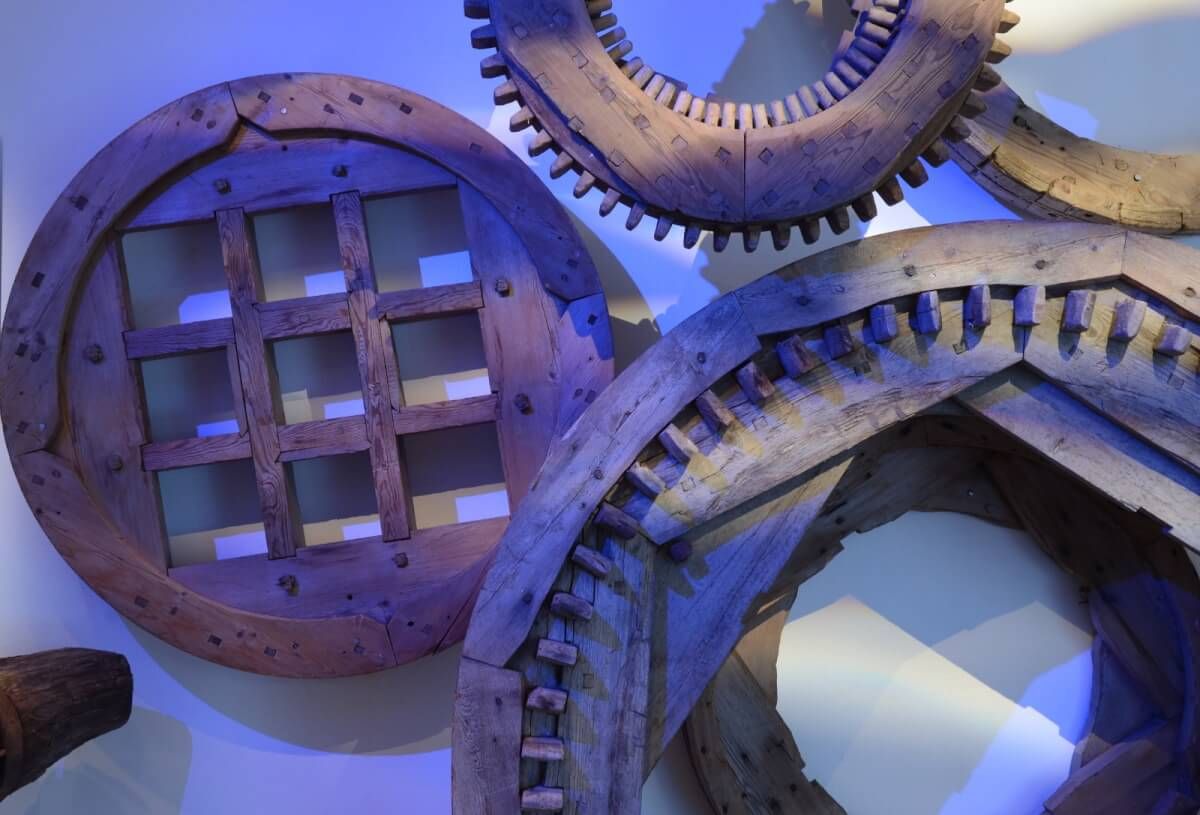
Room 1 introduces the significance of energy with large waterwheels and gears. The displays tell about tradition and modernity in linen manufacturing, crafts, and industry.
Room 2 is about national ideals and politics through one of the figures of the home handicrafts movement, Stina Rodenstam in Hudiksvall. Rodenstam's contribution was about the struggle for women's suffrage, philanthropy, home handicrafts, and education.
In Room 3, textiles are presented in relation to questions about power, body, ideas, and existence. A feature-length film where people dress takes center stage. It portrays identity evolving from clothes, ages, professions, and gender.
Publication date
- Published
Location
Storgatan 31
824 32 Hudiksvall